

Two ways to start
Already have a SKU in mind? Run a full validation. Still exploring? Share your price comfort, shipping patience, and market, then review suggested angles before you commit.
Aligned to how you sell
Tell WeThryv whether you care more about long-term demand or shorter trends, your target country, retail price band, and how you plan to acquire customers. Analysis weights what matters to your situation.
A report you can act on
See an overall verdict and score breakdown, how the idea fits your market, objections buyers raise in the wild, supplier options to investigate, and prioritized next actions.
See it in action
Watch how WeThryv moves from a product idea or discovery preferences into a scored report with market fit, buyer language, supplier direction, and next steps.
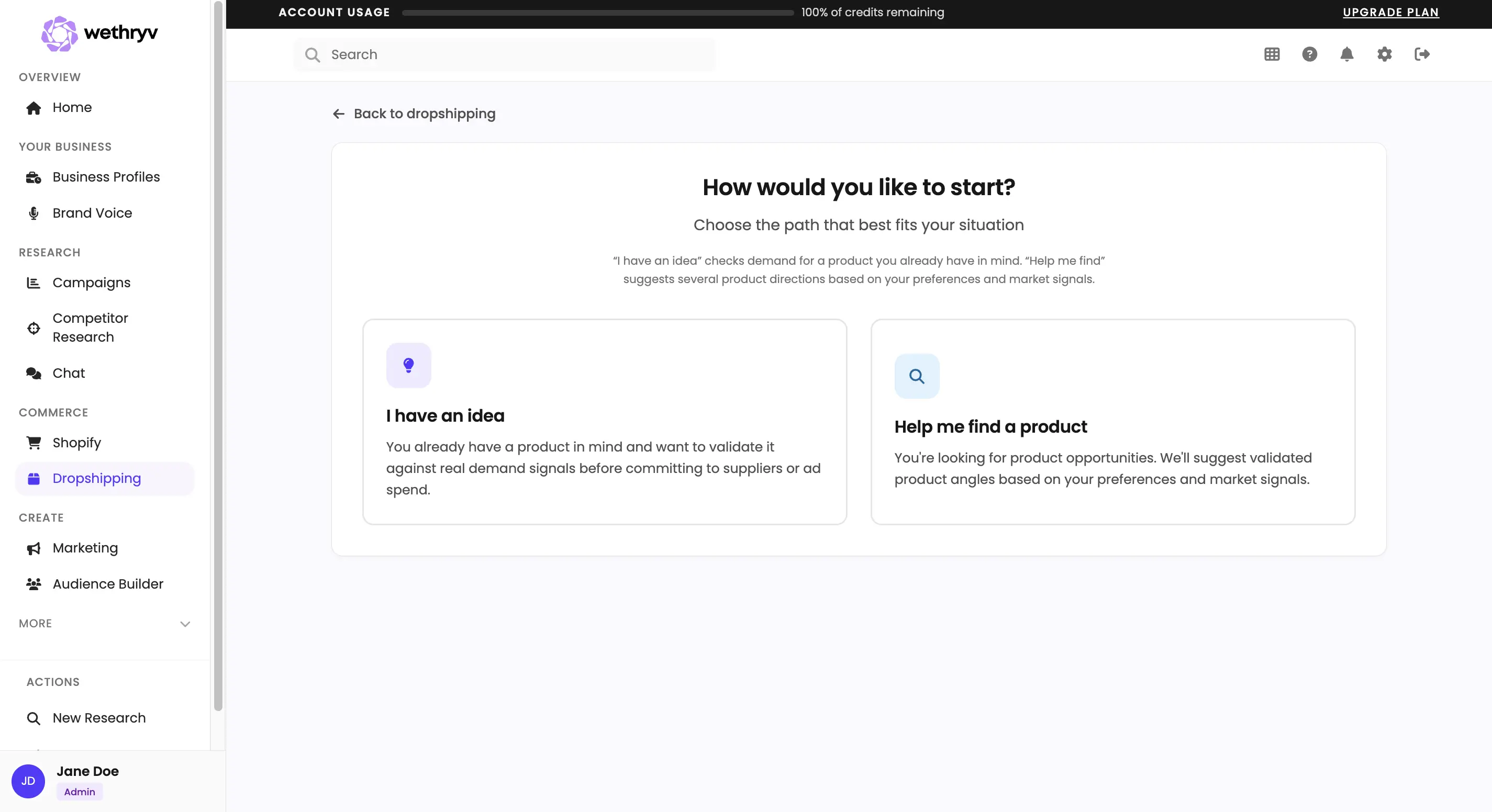
Validate or discover
Choose the path that matches where you are: pressure-test one product hypothesis with optional listing context, or generate candidate product angles from your preferences and public signals, then drill into the ones you like.
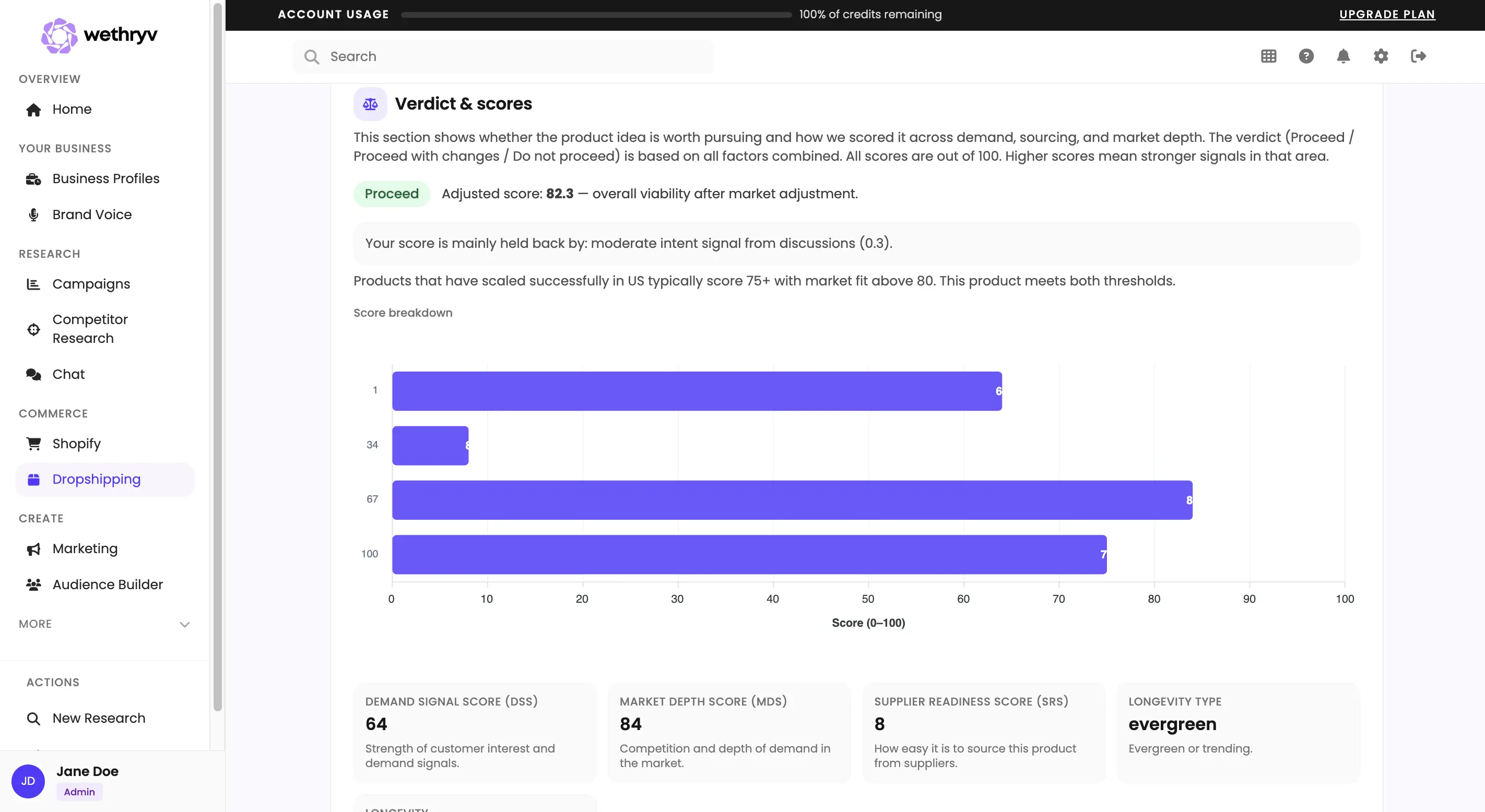
Verdict and score breakdown
Get a proceed-style verdict plus an adjusted score that reflects your primary market. Charts and subscores explain demand, competition depth, and sourcing-related signals so the headline number is not a black box.
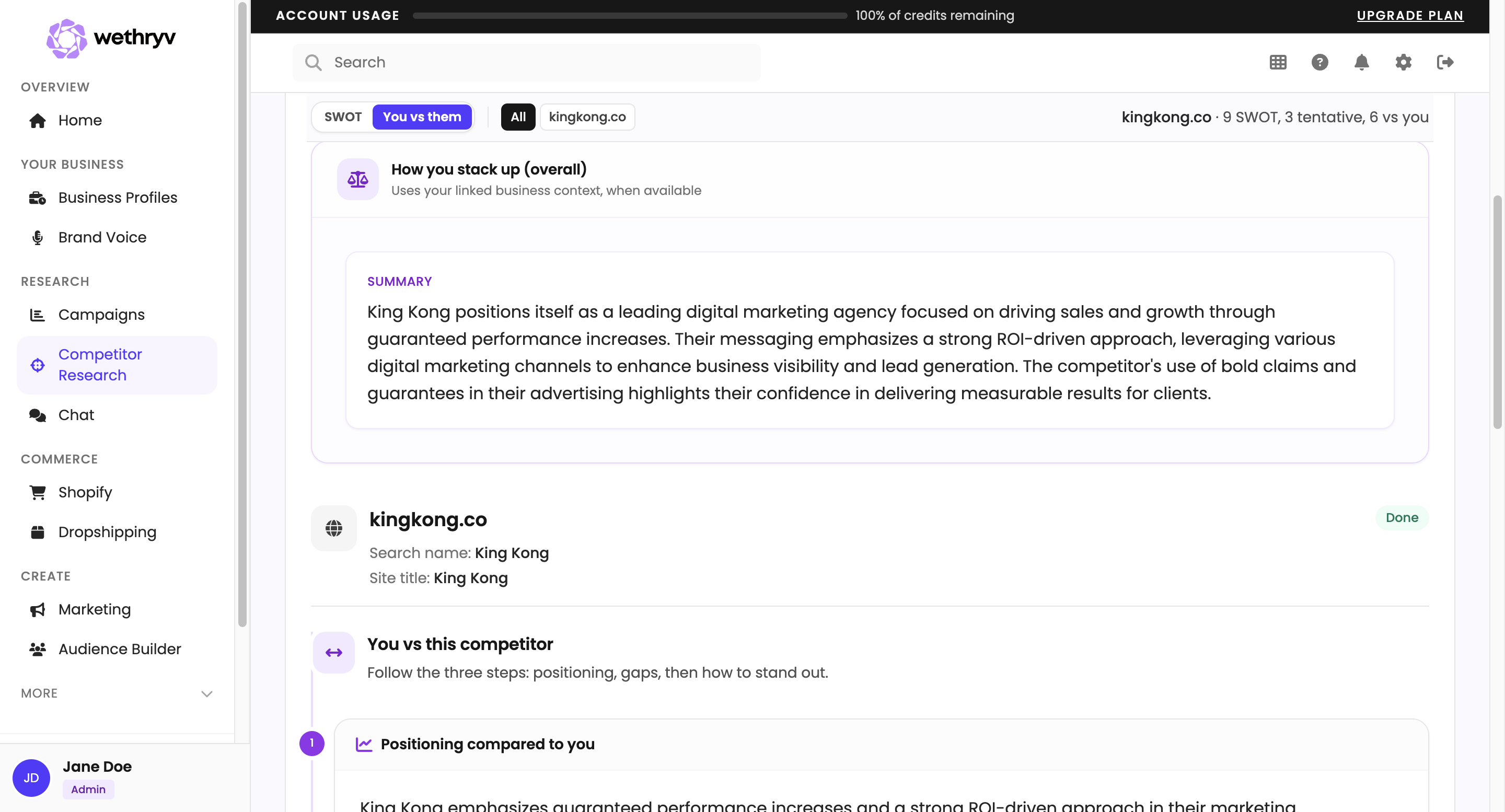
Market fit and buyer language
Review how well the offer fits the market you selected and which objections or desires show up repeatedly in real discussions. Execution risks call out issues that can hurt conversions even when demand looks fine.
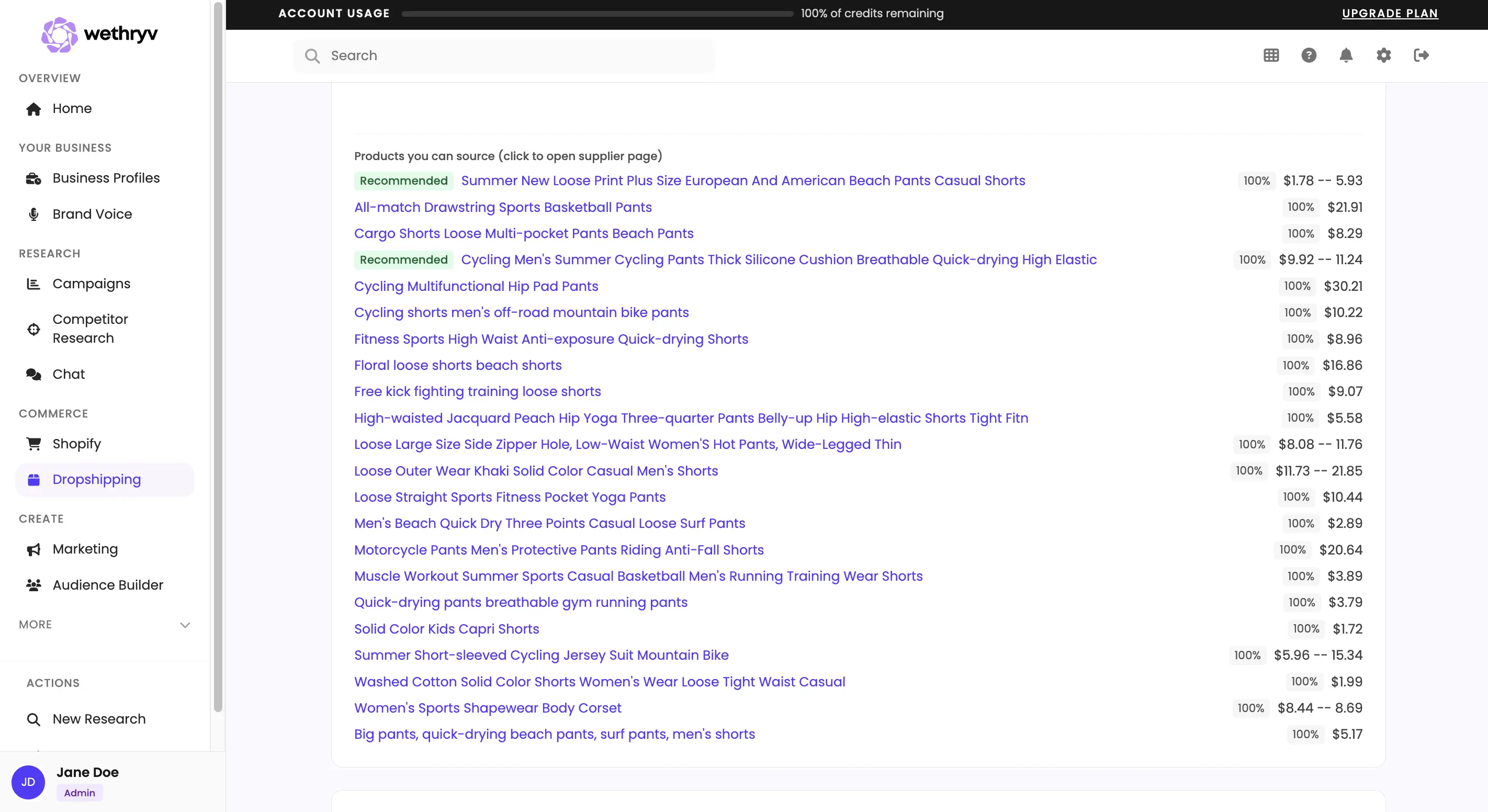
Supplier direction without the spreadsheet mess
See whether plausible supplier matches exist for your angle, with links and feasibility context you can verify yourself. It is a starting point for outreach, not a guarantee of stock or pricing.
What Our Customers Say
Real outcomes, across industries.
How it works
Get started in minutes, not weeks.
Choose your path and goals
Pick validation for a specific idea or discovery for new angles. Set optimization intent, primary market, price band, channel plans, and shipping patience where asked.
Run the research job
WeThryv processes public conversations and market signals in stages you can track. You can leave and return; progress and results stay tied to your workspace.
Read the report and move
Use verdict, scores, market fit, objections, supplier leads, and next actions to decide whether to proceed, pivot, or drop the idea before inventory and ads.
Real Businesses. Real Results
These businesses stopped guessing what customers wanted and started using the exact words their customers use. The result? 10x ROAS, 5.7% conversion rates, and campaigns that actually work.

- Case Study
- /
- E-commerce
- /
SerenoVita: From $2K Wasted to 4x ROAS by Targeting the Right Audience
View Results
Frequently asked questions
- 01What is WeThryv dropshipping research?
It is a workflow inside the WeThryv product for ecommerce operators who want to validate dropshipping ideas or discover new angles. You provide your product hypothesis or preferences and target market; WeThryv returns a structured report with scores, verdict, market fit, buyer objections from public discussions, supplier feasibility hints, and recommended next steps.
- 02Do I need a product idea before I start?
No. You can validate one idea you already have, or choose discovery to generate multiple candidate angles from your comfort settings (price band, shipping patience, support tolerance, and primary country) before you pick one to validate in depth.
- 03What does optimization intent change?
It tells WeThryv whether you care more about steady long-term demand, shorter trend windows, or you are still deciding. That choice influences how timing and risk are weighted in analysis and how results are phrased. It does not lock you into a single strategy.
- 04What will I see in the results?
Typical sections include verdict and scores, market fit, customer objections backed by discussion signals, supplier-related findings, execution risks that could hurt conversions, concrete next actions, and test feedback where the pipeline provides it. Exact fields can evolve as the product improves.
- 05Does WeThryv guarantee sales or inventory?
No. Output is research and prioritization support. Demand counts, competitor breadth, and supplier hints depend on what is publicly visible and platform limits at run time. Always verify suppliers, pricing, and compliance yourself before you take orders.
- 06Can I add a supplier or marketplace listing URL?
Yes on the validation path, and it is optional. A listing helps judge sourcing feasibility. If you do not have one yet, you can still run validation from your written product idea.
- 07How long does a run take?
Most validations finish in minutes, not hours, but runtime depends on queue load and how deep the stages are for that run. The in-app progress view lists stages such as demand, language, scoring, and packaging so you know what is still running.
- 08Is this separate from Shopify product descriptions?
Yes. Dropshipping research focuses on whether to pursue a product and how it fits your market. Shopify-connected copy generation is a different WeThryv ecommerce workflow. Many teams use both: validate the idea first, then write on-brand descriptions once they commit.
- 09Which countries does it support?
You choose a primary target market and optional additional regions. Analysis prioritizes the primary country for demand and competition context. Results are only as strong as the signals available for that market.
- 10Who is this for?
Solo founders testing SKUs, small teams launching new categories, and agencies who need a repeatable way to brief clients on product risk before media spend. It is built for people who want evidence-backed go or no-go decisions.
- 11How does pricing affect dropshipping research?
Plan limits for campaigns, profiles, and related workflows apply the same way as other WeThryv features. Check the pricing page for current allowances and upgrade if you need higher volume or more brands.
- 12What should I do if the verdict says not to proceed?
Treat it as a signal to change positioning, price, market, or product shape, or to drop the idea. Use the objection and risk sections to see why the model flagged concern, then rerun after you change something meaningful or move budget to a stronger angle from discovery.